
Measured, not assumed.
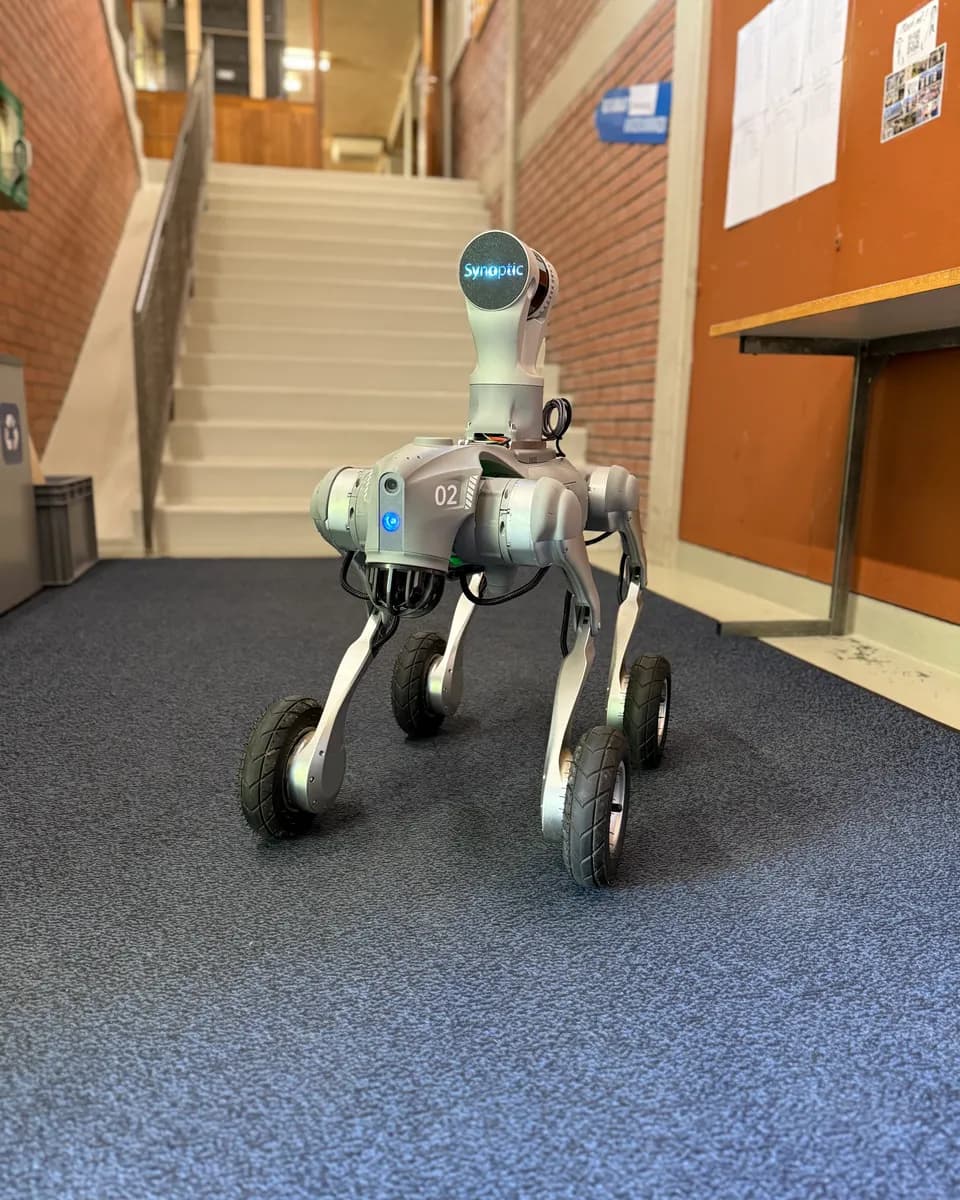
We capture the building with our own robot, so we know how every single point was measured. That knowledge is meant to survive every step, all the way to the BIM model. So you can see where a result can be trusted and where it cannot.
The usual hand-over loses something important
Scanning and modelling are usually two jobs for two companies. What gets handed over is a file of points. How those points were measured stays with whoever scanned them.
Scan-only providers
Typically deliver a point cloud and stop there. Whoever models it rarely learns how precise each measurement was, so important information is lost.
Scan-to-BIM services
Typically model from a point cloud without the measurement details, and treat every point as equally reliable, although it is not.
Synoptic
Captures, processes and models everything in one system. What we know about each measurement is kept and available to every later step.
One thread from the robot to the model
Each step is meant to pass on not just its result, but also how certain that result is.
- 01 · Capture
Every point with its precision
For each point we keep the distance, the angle and the station it was measured from. So its precision is known from the start.
- 02 · Interpretation
Recognised, with its certainty
The AI recognises walls, slabs and openings. It is meant to state how certain it is, rather than simply decide.
- 03 · Model
Dimensions with their precision
Every element is meant to show how precisely it is known. What the robot could not see is marked as inferred, not passed off as measured.
Precision and uncertainty, from start to finish
More from every measurement
Not every measurement is equally precise. A point measured up close and head-on is more precise than one taken from far away at a shallow angle. We know how each point was measured, and we weight it accordingly.
That way we find the actual surface sooner, and we can say how precisely it is known. A plain average treats every point the same and gets pulled off by the imprecise ones.
- Measurement with its uncertainty
- Weighted estimate and its confidence range
- Plain average
- Actual surface
AI where it helps. Geometry where it counts.
Each part of the reconstruction takes on the task it does best. None of them guesses where another knows more.
Geometry measures
Dimensions come from surfaces fitted directly to the measured points. They never come from an AI estimate.
AI interprets
It recognises elements and links surfaces that belong together. Those are decisions a measurement cannot make on its own.
The solver reconciles
Where the robot could not see, it closes the gap through connections and repeated elements. Those places stay marked as inferred.
Every project starts with a scan
Plan a scan of your building. It is the first step towards results that tell you how far you can trust them.